In a B2B manufacturing company, the money rarely sits in the bank. It sits with customers, in overdue invoices, and in goods that left the hall without anyone ever invoicing them. Usually the only way to know is a spreadsheet someone updates once a month, and phone calls someone makes when they find the time.
This post shows how, at a manufacturer of machine parts, we turned that into one accounts receivable control: from the order, through dispatch from the warehouse, to the payment reminder. And what came to light the first time we saw the full picture.
Where a manufacturer's money really sits
A manufacturer finances its customers for longer than it thinks. First material and labour, then goods in transit, then the payment term, then a few weeks of "we will pay shortly". Each department sees its own piece: sales sees the order, the warehouse sees the dispatch, accounting sees the invoice and the bank statement. Nobody sees the whole, so nobody owns it.
So we started receivables control with one rule: everything we know about a customer's money lives in one place and is calculated from the books, not copied into a spreadsheet.
A receivables dashboard: one number and what stands behind it
Management got a dashboard that answers the questions they used to ask by phone:
- Total receivables and ageing: how much is overdue and for how long.
- The largest overdue accounts, in other words who to call first.
- A split by account manager and country, because in export every market pays differently.
- A month-on-month trend, calculated from the books, so nobody adjusts it by hand.
- Customers invoiced in euro shown in both euro and zloty at once.
Behind every number sits the customer card. In one place: open and all invoices, orders waiting to be invoiced, payments, incoming payments waiting to be matched, and the history of the credit limit. A conversation with a customer about debt starts from facts, not from searching three programs.
Credit limit and credit approval, before the goods are made
The cheapest moment to decide on trade credit is when the order comes in, not the day the goods stand ready on the loading dock. Every customer has a credit limit in their own currency. Usage is the receivables balance plus confirmed orders that are not invoiced yet, because those are exactly what will become debt next.
Only authorised people can change a limit, and always with a stated reason. A year later you can see who raised the limit for a customer who then stopped paying, when, and why.
An order above the limit, or from a customer with overdue invoices, does not go through without approval from a decision maker. The salesperson requests it with one click, and the approval carries a justification, is valid up to a set amount and can be withdrawn. A customer ordering through the partner portal can still place an order above the limit, but the system flags it and creates a task for the account manager. Sales do not stop; they just stop being unconditional.
A dispatch block: goods do not leave for a debtor
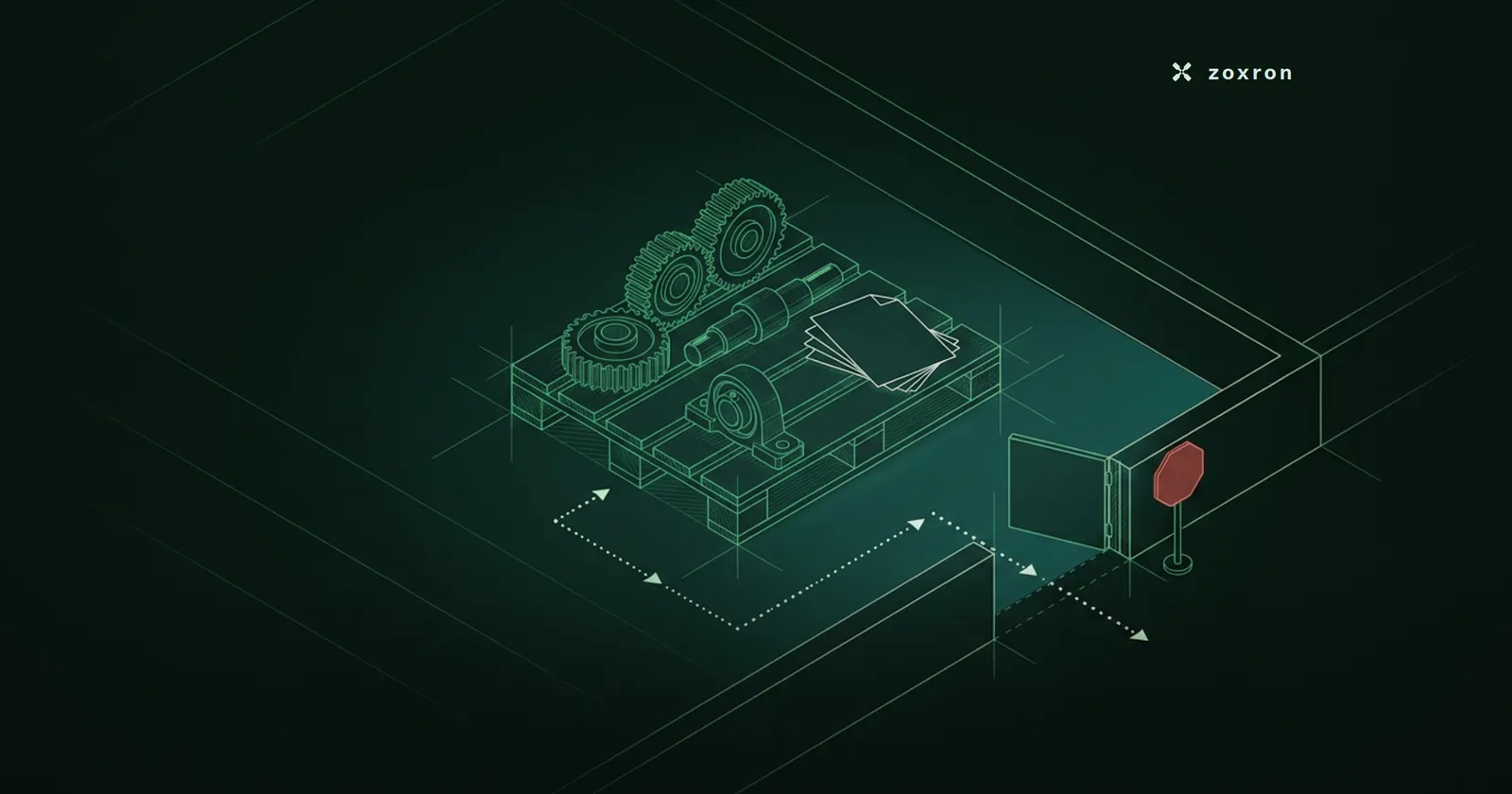
The strongest argument in B2B collections is the next delivery. When a customer has an invoice more than 30 days overdue, the warehouse sees a red "do not dispatch" on the delivery note. The goods do not leave without approval from the decision makers, and they get a notification straight away.
This is not an automatic cut-off. The decision stays with people, but it is taken consciously and before loading, not after the fact when the driver has already gone.
Orders without an invoice: money nobody knew about
The most interesting finding was not about debtors. A separate list showed goods delivered to customers that had never been invoiced. Partial deliveries, corrections, last-minute order changes: each one on its own looked like a detail.
Together they came to several dozen orders worth roughly PLN 150,000. The goods had long been with the customers, while that money did not appear in the books at all, so nobody chased it. Most of it could be invoiced on the spot.
That is why the most important figure on the dashboard is "total to collect": unpaid invoices plus goods dispatched without an invoice. It is the one number management actually wants to know, and the first one they did not know before.
Reminders and payments without guesswork
A reminder goes out by email, with a preview before sending, or as a letter printed on company letterhead together with copies of the invoices. Letters wait on a separate "to post" list, the system records the posting date and plans the next contact after 10 days on its own. Every reminder carries the right bank account in the invoice currency, so the customer has no excuse about not knowing where to pay.
The other side is incoming payments. A transfer without an invoice number, or from the customer's parent company, usually waits until someone guesses by the amount. Now the system suggests the right customer based on the sender's account from the bank statement and the invoice number in the payment reference. Fewer payments hang unmatched, and the customer balance is real.
This leads to the most important lesson: receivables control is only as good as the reconciled bank statements underneath it. That is why the dashboard shows the date the balances are valid for. Whoever decides about a customer sees at once whether they are looking at yesterday's data or data from three weeks ago.
One control instead of spreadsheets and phone calls
All of it runs on Odoo as the base, but the customer is not buying an add-on. They are buying a way of working in which the order, dispatch, invoice, payment and reminder are one process with one owner. We wrote about how we start such projects on the shop floor in ERP in manufacturing: who makes the first move, about the packaging that leaves with every shipment in Pallets, stretch film and EPR: a packaging report that builds itself, and about partners placing their own orders in A B2B portal on Odoo that partners actually use.
FAQ
Won't a dispatch block hurt relationships with good customers?
The block applies only to invoices more than 30 days overdue, and a decision maker can always release it. A good customer with a temporary delay still gets the goods; someone simply decides it consciously, and it leaves a record.
Does the credit limit work for customers invoiced in euro?
Yes. The limit is set in the customer's currency, and the dashboard shows euro customers in both currencies, so nobody has to convert anything in their head.
Where do we start with receivables control if today we have spreadsheets?
With clean data: reconciled bank statements and matched payments. We build the dashboard on that, then add limits, approvals and reminders one at a time, so the team gets used to one change at a time.
If your money sits with customers and in goods dispatched without an invoice, let's talk. We start with one number: how much you have to collect in total. More about how we work on the services page.